THE RULE
Low sun, rain opposite
You need the sun behind you and 42° or lower, with rain falling in front. Mornings and late afternoons are best.
Check the sun height doodlerainbow
00A RAINBOW SPOTTER'S GUIDE
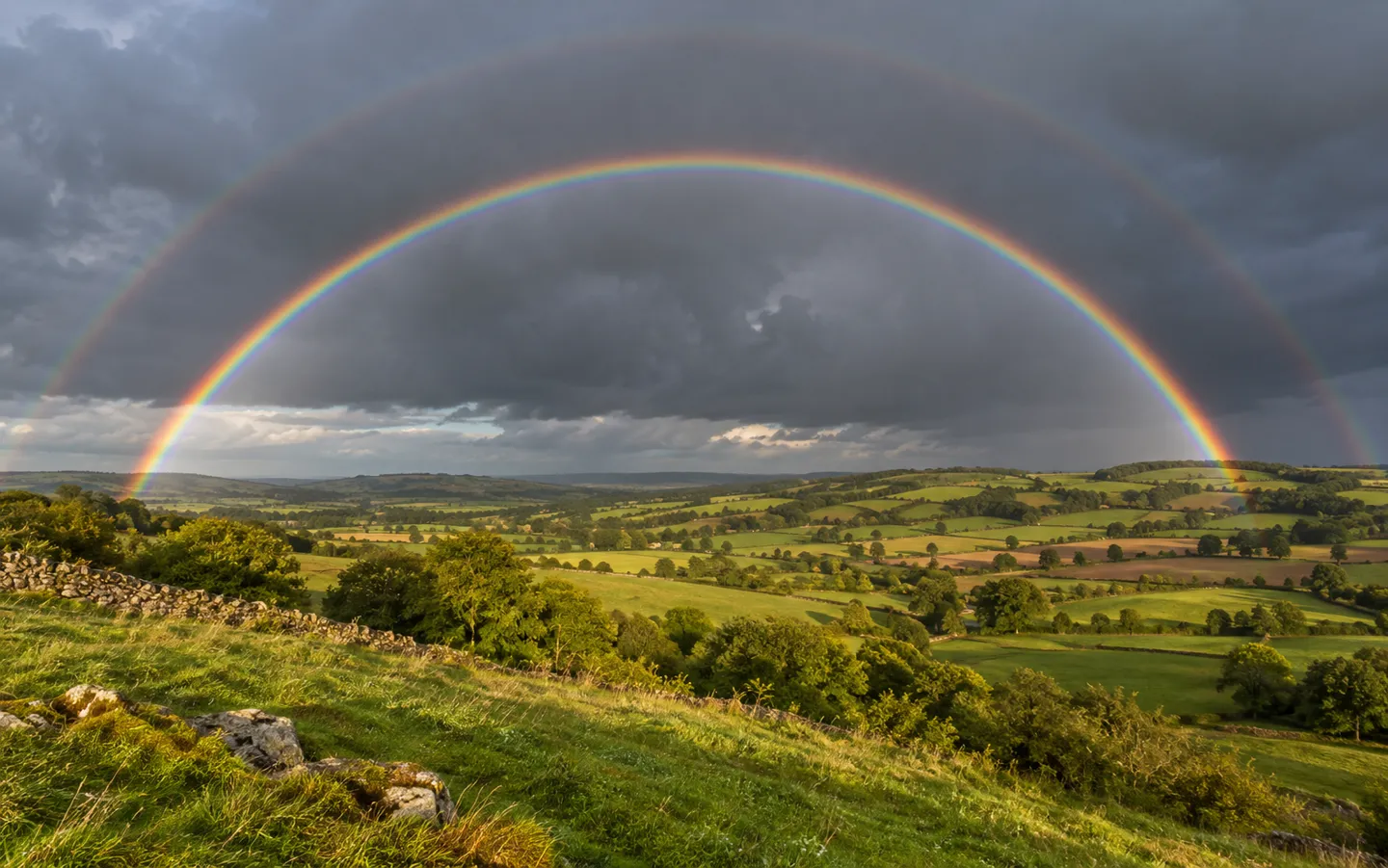
Rainbows are not luck. They follow simple geometry.
A rainbow only appears in one place: opposite the sun, about 42 degrees from the point your shadow's head points to, and only when the sun is low enough. Know the rule and you will spot far more of them, including the faint second bow most people miss.
Plain English, with the sources linked.
Check the sun height01Principles
02THE SHORT ANSWER
Every rainbow is centred on the point
directly opposite the sun.
THE RULE
You need the sun behind you and 42° or lower, with rain falling in front. Mornings and late afternoons are best.
Check the sun heightTHE RARE ONE
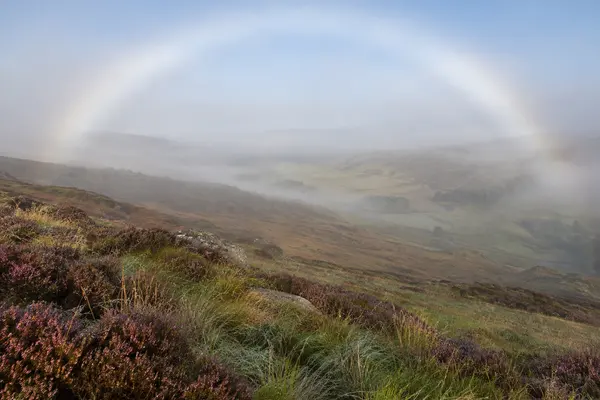
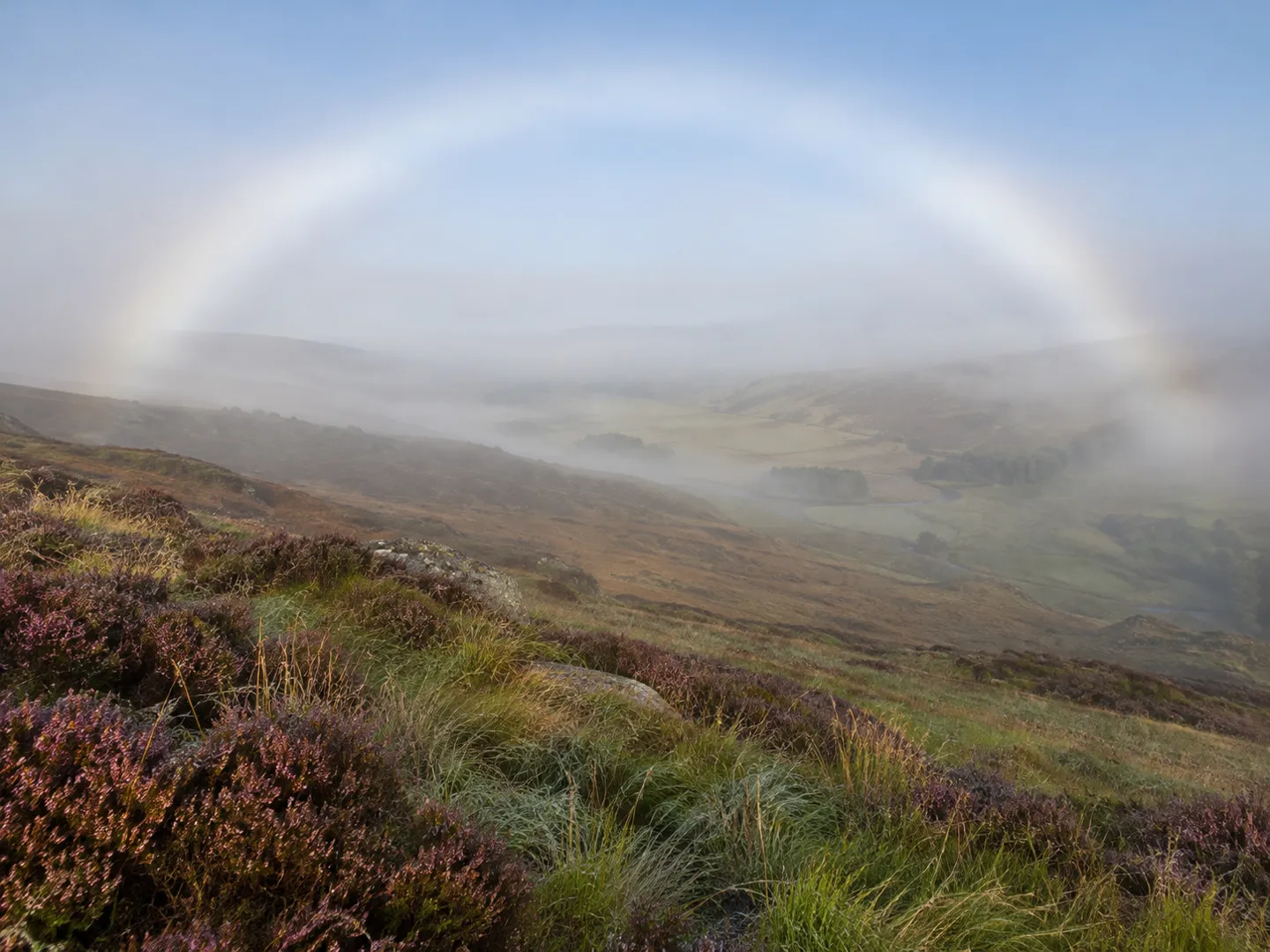
Tiny fog droplets make a broad, almost colourless bow, the fogbow. Look for it in thin mist with the sun behind you.
Why it is whiteTHE HOME-MADE ONE
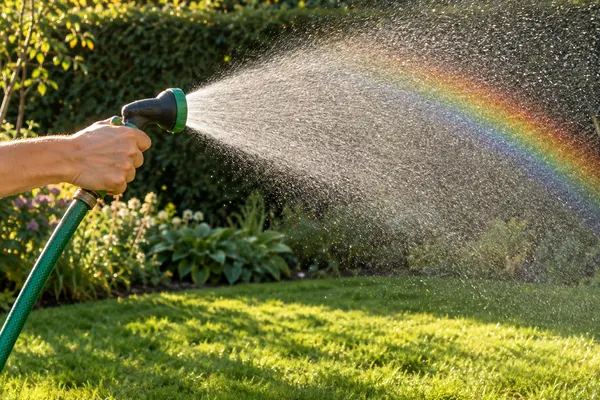
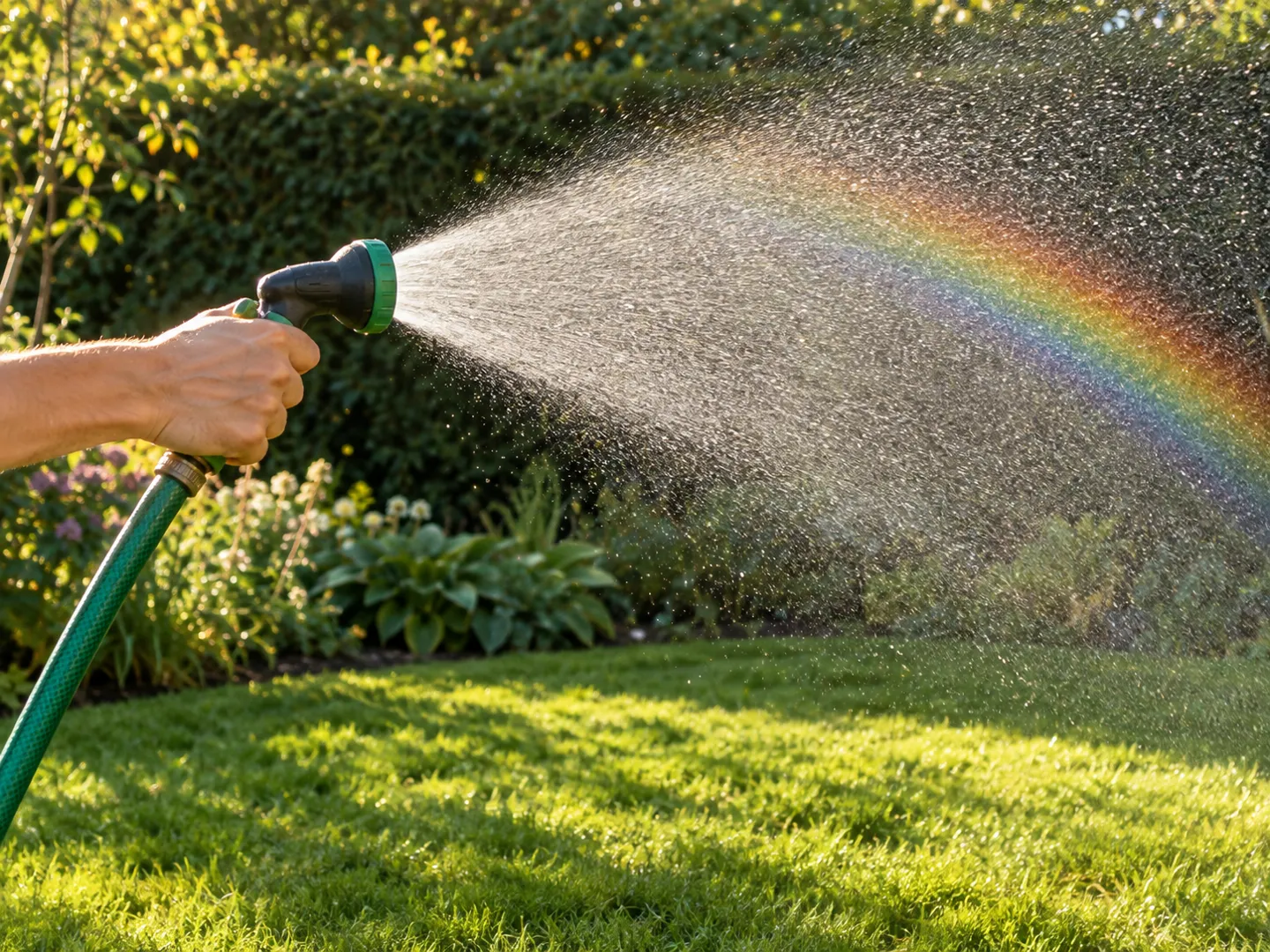
A fine spray from a hose works like a rain shower. Same rule, same 42°, just a smaller-looking bow.
How to try it03A QUICK SUN CHECK
Pick the sun's height above the horizon. A primary rainbow forms a circle of about 42° around the point opposite the sun, so the higher the sun, the lower the top of the bow.
Figures are rounded, for a flat horizon and a primary bow. Hills, buildings and where the rain is all change what you actually see.
04TWO NUMBERS WORTH KNOWING
The second bow is easy to miss,
and some rainbows outstay the shower.
42° vs about 50°
Angle from the point opposite the sun
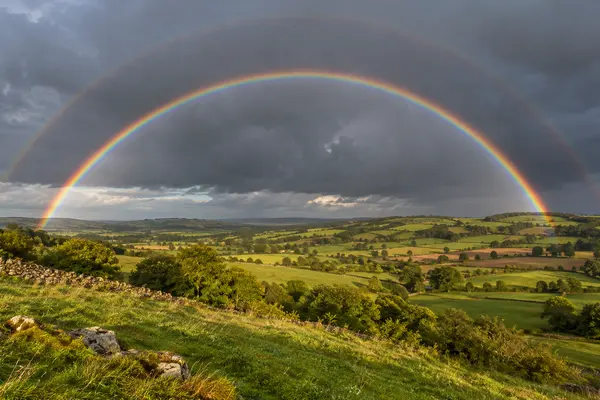
Light that reflects twice inside the drops leaves at around 50°, so a fainter second bow sits outside the main one, with its colours reversed. The sky between the two is darker: Alexander's dark band.
THE SECOND BOW
~1 hour vs 9 hours
Typical rainbow vs a reported record
The Royal Meteorological Society says rainbows usually last about an hour. A display over Taipei was reported to have lasted 9 hours, as the sun and showers lined up again and again.
HOW LONG IT LASTS
Both depend on you staying in the right place: the bow moves with you, because each observer sees light from a different set of drops.
05NEXT TIME IT SHOWERS
Sunshine and showers in the morning or late afternoon are the classic recipe. When rain clears with the sun out and low, go and look.
Your shadow points towards the centre of the bow. The bow sits about 42° out from that point, all the way round.
Once you find a rainbow, look further out for the fainter second bow with reversed colours, and the darker band of sky between them.
With the sun behind you, set a hose to a fine mist and spray it in front of you. The same 42° geometry produces a small rainbow in the spray.
06RAINBOW FACTS
The US National Weather Service and Australia's Bureau of Meteorology both put the limit at 42°: stand with the sun behind you, the rain in front, and the sun no higher than that.
The Bureau of Meteorology gives red at 42°, green at 41° and violet at 40°. That is why red sits on the outside of the main bow and violet on the inside.
A secondary rainbow sits outside the first, is fainter and shows its colours in reverse order. MeteoSwiss notes the darker sky between them, known as Alexander's band.
Fog droplets are usually under 0.1 mm across, 10 to 1,000 times smaller than raindrops, says the Met Office. The resulting fogbow looks almost colourless.
From the ground you usually see only the top, because there are fewer raindrops towards the ground. From the air, as NASA's Astronomy Picture of the Day shows, the whole circle can appear.
07QUICK QUESTIONS
Short answers to the questions people ask most.
The sun has to be about 42 degrees or lower in the sky. Around midday in summer it is usually higher than that, so the bow would sit below the horizon. Mornings and late afternoons give the best chance.
Away from the sun. Stand with the sun behind you and the rain or spray in front of you. The rainbow is centred on the point directly opposite the sun, so it always appears on the opposite side of the sky.
In the main bow, red is on the outside and blue and violet are on the inside. In a second, fainter bow outside the first, the order is reversed, with red on the inside.
Yes, occasionally. Moonlight can make a rainbow, often called a moonbow, when the moon is bright and close to the horizon and there is rain in the opposite part of the sky. It usually looks pale to the eye.
Usually not long: the Royal Meteorological Society says rainbows typically last about an hour. One seen over Taipei was reported to have lasted 9 hours, an unusually long display.
08Sources
A NAME WITH A BIT OF COLOUR
doodlerainbow.com is part of the DoodleSale portfolio. It isn't in an auction right now, but you can ask about leasing it.